


Mint Hospital Women's Medical Center addresses major diseases that threaten women's uterine health
We diagnose, treat, and monitor uterine fibroids, adenomyosis, and endometriosis under the principle of uterine preservation.
Mint Hospital · Uterine Diseases
From diagnosis to treatment of uterine diseases,
Mint Hospital Women's Medical Center
20,000
Cases
Fibroid Treatment
20
Years
Expert Team
5
Treatment Options
Robotic · Hysteroscopy · Laparoscopy · Embolization · Hybrid
2
Years
Guarantee
Symptom Checklist
Do you happen to have these symptoms?
Uterine Disease Symptom Checklist
If you select the applicable item from the symptoms below, you can view guidance based on your current status.
0 selected- My menstrual flow has increased noticeably compared to before, so I frequently change large sanitary pads.
- It is common to experience a sudden gush of blood clots during menstruation.
- Due to heavy menstrual bleeding, I developed symptoms of anemia such as dizziness and shortness of breath.
- The intensity of menstrual cramps experienced every month is getting worse, and the number of painkillers taken is increasing.
- I have to urinate frequently (frequent urination), and I do not feel relieved even after going to the toilet (residual urine).
- You feel a heavy pressure in your lower abdomen or feel a hard lump.
- Back pain (lumbago) or pelvic pain has become frequent for no particular reason.
- I feel deep pain (dyspareunia) during sexual intercourse that I didn't have before.
- I am planning to get pregnant and have been trying consistently, but it has not worked for over a year (infertility).
- Even though I haven't gained weight, my lower belly is bulging out like I'm pregnant.
1–2 apply — Regular monitoring is helpful. An annual check-up is recommended.
3 to 5 items apply — You need a uterine examination. Please get an ultrasound.
6 or more apply — You need to see a specialist immediately. If left untreated, symptoms may worsen.
Treatment Guide
What kind of treatment is needed for uterine diseases?
4 to 5 or more applyIf possible, you can consider active treatment.
We select an appropriate treatment method by comprehensively considering the patient's symptoms, the location and size of the lesion, pregnancy plans, etc.
01
Robotic surgery recommended
• If you are planning a pregnancy
• Complex uterine diseases (multiple fibroids, giant fibroids)
• lesions located deep within the body
• When bleeding control is difficult
• When a quick recovery is needed

02
Hysteroscopic surgery recommended
• Small uterine fibroids located within the uterine cavity that can be treated without abdominal incision

03
Laparoscopic surgery recommended
• If you do not plan to get pregnant or give birth for the time being
• Cases where the difficulty of the surgery is relatively low
• When the cost of robotic surgery is burdensome

04
Embolization recommended
• Cases where a hysterectomy is the only option
• Cases where the growth rate of the lesion is slow
• Patients for whom surgery is difficult

Uterus Preservation Principles Upheld by Mint Hospital Women's Medical Center
Hysterectomy alternative treatment,
As a principle of primary treatment.
No patient comes to the hospital to lose their uterus.
Mint Hospital has been treating uterine fibroids since 2008. The principle of prioritizing uterine preservationIt is done as.
After reviewing all uterine-preserving options, including hormone therapy, robotic surgery, hysteroscopy, laparoscopy, and embolization, hysterectomy is recommended as a last resort.
Preserving the uterus is the top priority,
To each and every patient
The most suitable treatmentI suggest
- 01
- First, we check the possibility of preserving the uterus.
Among robotic surgery, hysteroscopy, laparoscopy, and embolization for uterine fibroids, we first check the method that preserves the uterus.
- 02
- We are also reviewing cases where hysterectomy was recommended.
Even in cases where a hysterectomy is recommended, we re-examine the imaging and re-evaluate the possibility of uterine preservation. We also seek uterine preservation through hybrid treatment for giant fibroids larger than 15 cm.
- 03
- We provide optimal treatment that takes fertility into consideration.
For patients planning pregnancy, robotic surgery with the highest precision and completeness is recommended to preserve fertility.

MINT Hospital ·
One-Stop Care System
Mint Hospital's uterine disease treatment
It proceeds like this.
It operates in three stages: diagnosis + treatment + management (follow-up at 1-week/3-month/6-month/1-year intervals).
Mint Hospital Uterine Diseases One-stop care system
1-STEP
Diagnosis
Using pelvic ultrasound / pelvic MRI, the attending physician and the Department of Radiology
We provide accurate diagnoses through multidisciplinary care by specialists.
2-STEP
Treatment
Selection of various uterine preservation treatment options + hybrid treatment
We will proceed.
3-STEP
Care
Dedicated after-sales care + 2-year warranty
We manage systematically.
Why Different
Why Mint Hospital Women's Medical Center Is Special
Diagnosis Process
How is the diagnosis of uterine diseases conducted at Mint Hospital?
From preliminary examination to multidisciplinary care — everything from diagnosis to treatment direction is determined in a single visit.

STEP 01
Preliminary examination and symptom listening
Comfortable consultation with your attending physician
After completing the medical questionnaire, we determine the direction of examinations through a detailed one-on-one consultation with the attending physician, listening in detail to what symptoms started and when, menstrual flow, pain, pregnancy plans, and existing medical history.

STEP 02
Premium Ultrasound
Precise diagnosis of uterine diseases
We use state-of-the-art equipment to precisely diagnose and confirm conditions such as uterine fibroids, adenomyosis, and endometriosis. We will explain everything in person while viewing the screen together.

STEP 03
Basic / Detailed MRI Examination
Philips AI-equipped pelvic MRI
We precisely identify adenomyosis, deep endometriosis, and complex fibroids through basic pelvic MRI (Screening) and detailed pelvic MRI (Full) examinations.

STEP 04
Multidisciplinary care
Obstetrics and Gynecology × Radiology × Interventional Radiology
From diagnosis to treatment, radiologists interpret images, while OB/GYNs in charge of surgery and interventional radiologists specializing in non-surgical procedures (embolization) discuss the treatment direction together.

STEP 05
Determining the direction of treatment
Decide on one of 5 uterus-preserving options
We guide the patient on the most suitable method among observation, drug treatment (hormone therapy), robotic surgery, hysteroscopy, laparoscopy, and embolization.
Treatable Conditions
Various uterine diseases with similar symptoms
Although uterine diseases may all appear similar, their causes, symptoms, and treatments are all different.
Even if the diagnosis is the same, the direction of treatment must vary for each patient.

1
submucosal fibroid
2
Intramural fibroids
3
subserosal fibroid
Uterine Fibroid
Uterine myoma
[40–50% found in those 35 years and older]
It is a benign intrauterine tumor that develops in the smooth muscle of the uterus.
Depending on the location, they are classified into submucosal fibroids, intramural fibroids, and subserosal fibroids, and their size gradually increases due to female hormones and growth hormones.
* Characteristics by Location *
① Submucosal fibroids: Even small ones cause severe bleeding and pain, and are a cause of infertility.
② Intramural fibroid: The most common type of fibroid
③ Subserosal fibroid: As it grows in size, it compresses
Symptoms
Symptoms of uterine fibroids

menstrual bleeding and menstrual cramps

A hard lump on the abdomen

Lower abdominal discomfort and pressure

Frequent urination, urinary incontinence, constipation

Iron Deficiency Anemia

Uterine enlargement
Adenomyosis
Adenomyosis
[Normal uterus enlarged 1.5 to 2 times]
It is a disease in which endometrial tissue invades the muscle layer of the uterus, causing it to enlarge.
Invasion of endometrial tissue promotes the growth of the uterine muscle layer, which can cause the uterus to enlarge to the size of a 12-week pregnancy.
* therapy *
① Drug treatment (Mirena)
② Adenomyosis Embolization
③ Laparoscopic resection
Symptoms
Symptoms of adenomyosis
Abdominal pain · Pelvic pressure pain
Heavy Menstrual Bleeding

Severe menstrual cramps

Abnormal Uterine Bleeding

Infertility

1
Uterine muscle layer > Adenomyosis
2
Ovary > Endometrioma
3
Pelvis > Deep Endometriosis
4
Lungs > Endometriosis
Endometriosis
Endometriosis
[Top Causes of Severe Menstrual Pain]
It is a condition in which endometrial tissue is present in organs other than the uterus and causes an inflammatory response. It is known to be caused by retrograde menstruation and is primarily located within the abdominal cavity around the ovaries, fallopian tubes, and uterus.
* Characteristics by Location *
① Occurs in the uterine muscle layer: Adenomyosis
② Occurrence in the ovary: Endometrioma
③ Occurs deep within the pelvis: Deep endometriosis
④ Occurrence in the lungs: Pulmonary endometriosis
Symptoms
Symptoms of endometriosis
Severe menstrual cramps
abdominal pain
difficulty urinating

Pelvic pain
Infertility

Back pain and dyspareunia

Normal uterus
Endometrial hyperplasia uterus
Hyperplasia
Endometrial Hyperplasia
[Simple, Complex, Aberrant – 3 types occur]
It is a condition in which the endometrium proliferates excessively due to stimulation by female hormones (estrogen). Depending on the type, 1 to 30% of cases can progress to endometrial cancer.
3 types *
① Simple type: Functional abnormality, ~1%
② Complex type: Advanced form, ~3%
③ Dysplastic hyperplasia: Precancerous stage, simple ~8% / complex ~30%
Symptoms
Symptoms of endometrial hyperplasia
Abnormal bleeding
Heavy Menstrual Bleeding

menstrual irregularity
lower abdominal pain

Asymptomatic (detected by screening)

Subendometrium polyp
Endometrial Polyp
Subendometrium polyp
[The Root Cause of Infertility]
It is a benign tumor that protrudes in the shape of a projection due to the partial excessive proliferation of normal endometrial tissue. It occurs more frequently in patients who are menopausal, have hypertension, obesity, or diabetes.
* Size · Quantity *
One to two are common, but large polyps and multiple polyps of three or more can also occur. The likelihood of associated diseases varies depending on size and location.
Symptoms
Symptoms of subendometrotic polyps
Abnormal bleeding
Heavy Menstrual Bleeding
Irregular vaginal bleeding
Bleeding after intercourse
Asymptomatic

cervix
Cervical Cancer
Cervical cancer
[Preventable Cancer]
It is a malignant tumor that occurs at the entrance of the uterus (cervix). Major risk factors include HPV (human papillomavirus) infection, medications, pregnancy, a history of sexually transmitted diseases, and smoking, and early detection and prevention are possible in over 90% of cases through HPV vaccination and regular screenings.
Diagnosis and Treatment
Pap smear / HPV test / Pelvic MRI / Biopsy → Precancerous stage: Cervical conization
Symptoms
Symptoms of cervical cancer
vaginal bleeding

stink
Difficulty Urinating

lumbago

lower extremity edema
Treatment method
Even with the same uterine fibroids Depending on the patient's condition
There are various treatment methods.
The key question is not 'Which method is the best?' but 'What method best suits my condition?'
| Comparison items |
Uterine fibroid embolization |
Hysteroscopic resection |
Laparoscopic |
Da Vinci robotic surgery |
|---|---|---|---|---|
| approach | Femoral artery 2mm minimally invasive | Non-invasive transvaginal hysteroscopy | 3~4 ports 0.5~1cm single hole 3~4cm | 3~4 ports 1~2cm single hole 3~4cm |
| Applicable diseases | Uterine fibroids, leiomyomatosis, adenomyosis | Endometrial polyps, submucosal fibroids | Uterine fibroids, adenomyosis, endometriosis | Giant uterine fibroids, multiple uterine fibroids, adenomyosis, endometriosis, uterine prolapse, etc. |
| Types of Anesthesia | local anesthesia | General/Local (Short) | general anesthesia | general anesthesia |
| Surgery/Procedure Time | About 1 to 2 hours | About 30 minutes to 1 hour | About 1 to 3 hours | About 2 to 3 hours |
| Hospitalization period | 1th~2th | Same day to 1 day | 3th~5th | 2th~3th |
| Return to daily life | 1~2 weeks | 2th~3th | 5th~10th | 4th~7th |
| scar | almost none | none | minimization | minimization |
| Uterus preservation | possible | possible | possible | Possible (precision resection) |
| Pregnancy Potential | Possible (from 6 months after the procedure) | Possible (immediately after recovery) | Possible (from 6 months after surgery) | Possible (from 6 months after surgery) |


Treatment Matrix
At which stage and what treatment?
01
Less than 3cm / Asymptomatic


Hysteroscopic resection –

embolization –

Laparoscopic –

robotic surgery –

Observation 6-month, 1-year follow-up
02
Multiple, three or more

Hysteroscopic resection Submucosal fibroid polyp
embolization recommend
Laparoscopic possible
robotic surgery possible
Observation –
03
8cm or more

Hysteroscopic resection –
embolization possible
Laparoscopic recommend
robotic surgery recommend
Observation –
04
10cm or more

Hysteroscopic resection –
embolization possible
Laparoscopic limited
robotic surgery recommend
Observation –
05
I am planning to get pregnant

Hysteroscopic resection Submucosal fibroid polyp
embolization Surgery recommended
Laparoscopic recommend
robotic surgery Most recommended
Observation –
Hybrid Treatment
What if preserving the uterus is difficult with a single treatment?
Mint Hospital's Hybrid Treatment
The reason why even giant uterine fibroids larger than 15cm can be treated without removing the uterus is Mint Hospital's hybrid treatment.

Before treatment

2 years after treatment
STEP 01
Diagnosis of giant fibroids, recommendation for hysterectomy
Diagnosed with a massive uterine fibroid measuring 16cm × 10cm at another hospital. Admitted that treatment is difficult without a hysterectomy.
STEP 02
Reduction in size through uterine fibroid embolization
After explaining hybrid therapy to a patient wishing to preserve the uterus, uterine fibroid embolization was performed. The fibroid size was reduced to 11 cm × 10 cm (volume decreased by approximately 31.25%), and symptoms caused by the fibroid were alleviated.
STEP 03
Two years later, completely removed by laparoscopic surgery
Two years later, the uterine fibroid, which had maintained its reduced size, was safely removed via laparoscopic surgery without damaging the uterus. Uterus preservation and restoration of normal uterine function.
※ The above cases are partial clinical examples published with the patient's consent, and treatment outcomes may vary depending on the individual patient's condition.
From surgery until complete recovery
Mint HospitalWe are together
Mint Hospital’s promise to take full responsibility until complete recovery by identifying potential side effects and complications after surgery, and listening to and managing symptoms.
PROMISE 01
Regular tracking management
We continuously monitor the recovery status through regular check-ups at 1-month, 3-month, 6-month, and 1-year intervals.
PROMISE 02
Consultations available at any time
Please contact us immediately if you experience any discomfort after surgery. We will respond quickly with a medical examination.
PROMISE 03
Lifelong primary care physician system
The specialist who performed the surgery personally handles post-operative care, ensuring consistent aftercare.
Patient Stories
Daily life regained after surgery
These are the stories of patients who received treatment at Mint Hospital and returned to their daily lives.
I recovered quickly from endometriosis surgery without much pain.
I fainted from sudden abdominal pain and went to a university hospital. I was given the choice between medication and surgery, so I chose medication... but I regretted it, so I immediately consulted with Director Ki Gyeong-do at Mint Hospital. Fortunately, I was able to schedule the surgery that same day, and he explained my condition in greater detail and with kindness. My anxiety subsided after the director told me that I would be fine after the surgery. (To be continued)
Endometriosis surgery patient review, 2026
My daily life has become healthier after uterine fibroid surgery.
I underwent a laparoscopic partial fibroid resection at Mint Hospital because a fibroid suddenly grew to 7cm in just three months, causing continuous bleeding for about six months and pressing on my bladder, leading to frequent trips to the bathroom. I gained confidence thanks to the accurate diagnosis via MRI and the kind explanations provided. (...) I was discharged after only three days, and I have been able to exercise, stop bleeding, improve significantly, and lead a healthier daily life.
Uterine fibroid surgery patient review, 2025
YOUTUBE
Mint Hospital YouTube

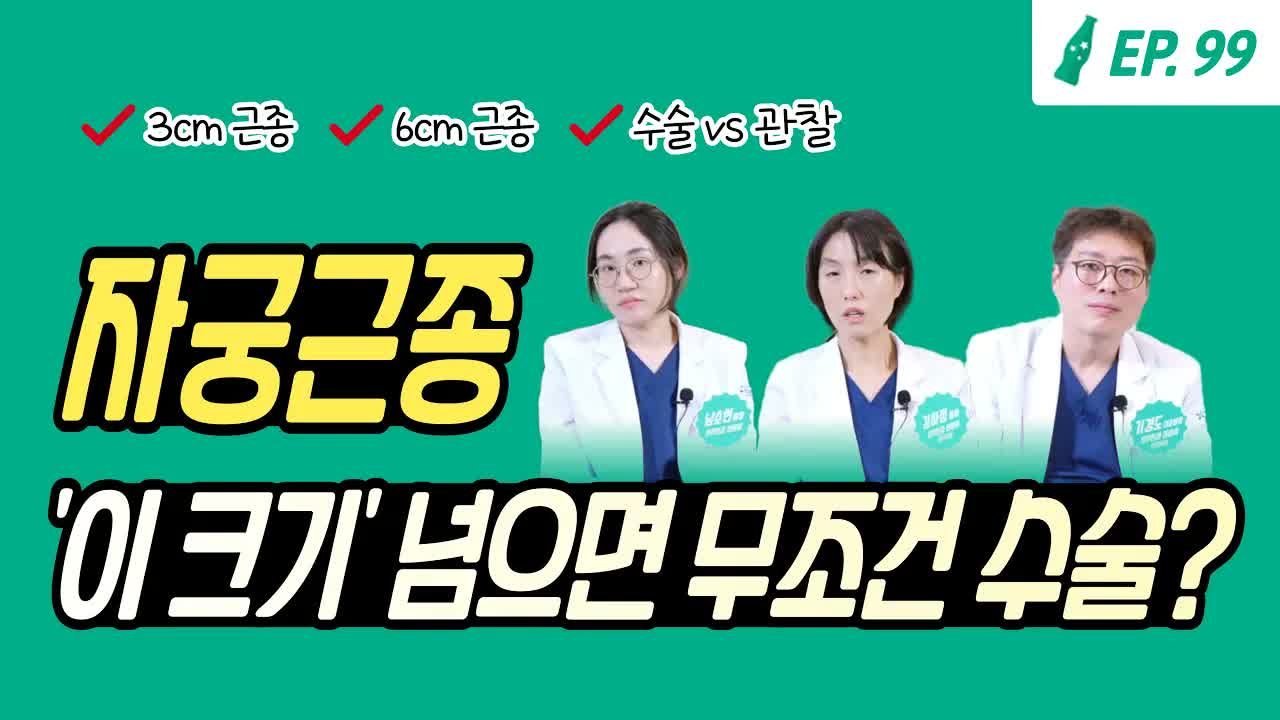
We will set the exact criteria for deciding on uterine fibroid surgery!

Can be mistaken for uterine fibroids
What is the real cause of menstrual cramps?

To patients with adenomyosis
'This' told by a doctor
FAQ
Uterine disease,
Such curiosity
Do you have any?
In the treatment of uterine diseases
I have compiled the most frequently asked questions.
I was advised to have a hysterectomy at another hospital. Is it possible to preserve my uterus at Mint Hospital?
Yes, it is possible. The top priority of Mint Hospital's Department of Obstetrics and Gynecology is 'uterine preservation.' Even in cases of large, multiple uterine fibroids, difficult-to-treat adenomyosis, or endometriosis with severe adhesions, we avoid unconditional hysterectomy and proceed with surgery to fully preserve normal uterine tissue and fertility.
Do all people with uterine fibroids need surgery?
No. If the size is less than 3cm and there are no noticeable symptoms, only regular follow-up monitoring at 6-month or 1-year intervals is performed. Treatment is initiated if there are noticeable symptoms such as excessive bleeding, anemia, or infertility, or if the size is growing rapidly. In accordance with the principle of prioritizing alternative treatments to hysterectomy, Mint Hospital first suggests the most conservative method among the uterus-preserving treatment options.
How do treatment methods vary depending on the size of the uterine fibroids?
Asymptomatic uterine fibroids smaller than 3 cm are monitored, while multiple fibroids (three or more) can be treated with embolization, hysteroscopy (submucosal), laparoscopy, or robotic surgery. For uterine fibroids 8 cm or larger, single-port laparoscopy or Da Vinci robotic surgery is recommended, and for fibroids 10 cm or larger, treatment involving Da Vinci robotic surgery or embolization to reduce size and alleviate symptoms is advised. However, this is not applied uniformly but varies depending on the location (submucosal, intramural, or subserosal) and pregnancy plans; a hybrid treatment is also available, in which large fibroids are first reduced via embolization and then safely removed laparoscopically.
What is hybrid therapy?
Hybrid therapy is a specialized treatment offered by Mint Hospital that combines two or more treatment methods for cases where a single treatment is insufficient. It is not applied in all situations; rather, it is utilized in patients with large uterine fibroids who do not wish to undergo a hystectomy, or those at high risk of bleeding. The approach involves minimizing the size of the lesion using non-surgical methods such as embolization, followed by the complete removal of the fibroid through a relatively less risky surgical procedure. This is performed under Mint Hospital's system, which enables real-time multidisciplinary care.
Since this is an OB/GYN examination, is an MRI scan necessary in addition to an ultrasound?
A perfect surgery begins with an accurate diagnosis. Mint Hospital actively utilizes pelvic MRI to accurately identify minute lesions, precise locations, and the degree of adhesion to surrounding organs that are easily missed by ultrasound alone. In particular, accuracy is high as radiologists directly participate in image interpretation; furthermore, MRI is more precise than ultrasound in differentiating between benign and malignant tumors, enabling the establishment of a safe treatment plan.
I am afraid of general anesthesia during surgery. Will I be safely managed throughout the operation?
You can rest assured. At Mint Hospital, all surgical anesthesia is handled exclusively by board-certified anesthesiologists stationed at the hospital at all times, rather than external freelance medical staff. We take full responsibility for the safe management of your anesthesia, from checking your condition before surgery to real-time vital sign monitoring during the operation and care in the recovery room.
I've heard that surgery for adenomyosis and endometriosis is particularly tricky. What is the reason for this?
This is because, unlike uterine fibroids which take the form of lumps, the boundaries of the lesion are indistinct or there is severe 'adhesion' where it clings to surrounding organs (intestines, bladder, etc.). For this reason, Da Vinci robotic surgery is recommended for high-difficulty cases. It is highly effective as it utilizes freely rotating robotic arms to precisely dissect only the lesion without damaging delicate nerves or organs, even within the narrow pelvic cavity.
Do you unconditionally recommend only robotic surgery? Are there no non-surgical treatment methods?
Mint Hospital does not adhere to a single treatment method. By comprehensively listening to the patient's age, symptoms, and future pregnancy plans, we propose a 'patient-tailored treatment solution' by carefully comparing whether robotic surgery is suitable, if laparoscopic surgery alone is sufficient, or if non-surgical treatments such as uterine fibroid embolization are preferable. Furthermore, rather than a single medical team handling all treatments, specialists are stationed for each treatment, ensuring smooth collaboration.
Why do endometrial polyps develop, and is it necessary to remove them?
Endometrial polyps are benign, fluid-filled sac-like tumors caused by the localized excessive proliferation of the endometrium. While one or two polyps are common, large polyps or multiple polyps of three or more may occur. Since endometrial polyps act as a fundamental cause of infertility, their active removal is recommended if you are planning a pregnancy. Hysteroscopic polypectomy is a non-invasive surgery that selectively removes only the lesions within the uterine cavity, allowing for same-day procedure and discharge.
Do you also treat cervical cancer?
Cervical cancer is a malignant tumor that develops in the cervix due to infection with the human papillomavirus (HPV). Since cancer treatment requires not only surgery but also coordinated therapies such as chemotherapy, Mint Hospital does not perform surgery; however, if cervical dysplasia, a precancerous stage, is confirmed through Pap smears and HPV testing, cone biopsy is available.
If my menstrual symptoms are severe, do I have to get treatment for everything? I am a woman in my 20s, so I am hesitant about surgery.
Severe menstrual cramps or excessive bleeding do not necessarily require surgery. In particular, unmarried women in their 20s and 30s often prioritize conservative treatments, such as medication or hormone therapy, while monitoring their progress. Mint Hospital first listens to the patient's age, lifestyle, and future pregnancy plans. Based on a thorough diagnosis, we propose customized solutions, such as minimally invasive robotic surgery or embolization, only when surgery is absolutely necessary, thereby alleviating the psychological and physical burden on our patients.
Which is the best treatment among robotic surgery, hysteroscopy, laparoscopy, and embolization?
The 'best approach' varies from patient to patient. After an accurate diagnosis based on precise examinations, we determine the most suitable treatment method by considering the patient's condition, lifestyle, and pregnancy plans. Mint Hospital performs all uterine fibroid treatments in-house; unlike hospitals that offer only a single method, we prioritize the most conservative approach for each patient.
What is the background of the medical staff at Mint Hospital Women's Medical Center?
The medical staff at Mint Hospital’s Women’s Medical Center holds subspecialties in gynecological oncology and has accumulated extensive clinical experience at Asan Medical Center, Samsung Seoul Hospital, and Kangdong Kyung Hee University Hospital. For over 20 years, they have specialized exclusively in the treatment of uterine and ovarian diseases, and non-surgical procedures such as embolization are performed by interventional radiologists. The center operates a close multidisciplinary collaborative system between the Department of Obstetrics and Gynecology and the Department of Radiology.
I am looking for a good OB/GYN clinic in Songpa, Gangnam, Seoul.
Mint Hospital is a specialized hospital for uterine and ovarian diseases located in Munjeong-dong, Songpa-gu, Seoul. It is a medical institution dedicated to women's health equipped with a multidisciplinary collaborative system involving Obstetrics and Gynecology and Radiology. While many patients from the Gangnam, Gangdong, Jamsil, Wirye, and Hanam areas visit the hospital, its proximity to KTX and SRT Suseo Station also attracts many patients from other regions.
I'm curious about hospital life. Are there rooms and lounge areas available?
All nurses at Mint Hospital's inpatient wards provide dedicated care for inpatients. Since 2024, the hospital has maintained Grade A, the highest rating under the differential nursing grade system, which ensures one patient per nurse. The hospital offers a variety of inpatient rooms, including single, double, and multi-bed rooms, and features lounges equipped with water purifiers and microwaves. An outdoor walking path, a convenience store, and a pharmacy are located on the first floor of the building, while a café is situated on the fourth floor.
Related Treatments
Medical treatments worth considering along with uterine diseases
Mint Hospital treats uterine and ovarian diseases using various methods. Let's review the method most suitable for your situation together.
Da Vinci robotic surgery
We safely remove only the lesions of underlying conditions such as uterine fibroids, adenomyosis, endometriosis, ovarian diseases, and chronic pelvic pain using advanced robotic surgical equipment.
Ovarian Diseases
We diagnose and treat the causes of ovarian diseases such as ovarian cysts, ovarian endometriomas, ovarian teratomas, and polycystic ovary syndrome.

Pelvic disorders
We diagnose and treat pelvic pain that persists for more than 6 months and has an unknown cause.
Signals sent by the uterus
Don't hesitate.
Get an accurate diagnosis at Mint Hospital and find uterine-preserving treatment methods together.
Medical consultation, examination, and diagnosis explanation are all possible in a single day.


