For hemodialysis patients, the dialysis blood vessel created in the arm is a pathway that enables repeated treatments several times a week.
Once you make it Since it may be used for several years, how the first dialysis line is established has a significant impact on one's future dialysis life.It drives me crazy.
When you start hemodialysis, you generally have to visit the hospital several times a week to remove waste products and excess fluid from your blood.
Given that this process can continue for several years, the importance of the blood vessels initially created for dialysis is also growing.
According to Nam Woo-seok, Chief Director of the Vascular Center at Mint Hospital (Vascular Surgeon), dialysis vascular access is not a treatment that ends with a single surgery.
He explained, “Since a thick needle must be repeatedly inserted and a large amount of blood circulated every time dialysis is performed, it is necessary to have not only sufficient blood flow but also the length and position to stably insert the needle. This is why the results of the initial dialysis vascularization procedure can affect the patient's subsequent dialysis life and the possibility of additional procedures . ”
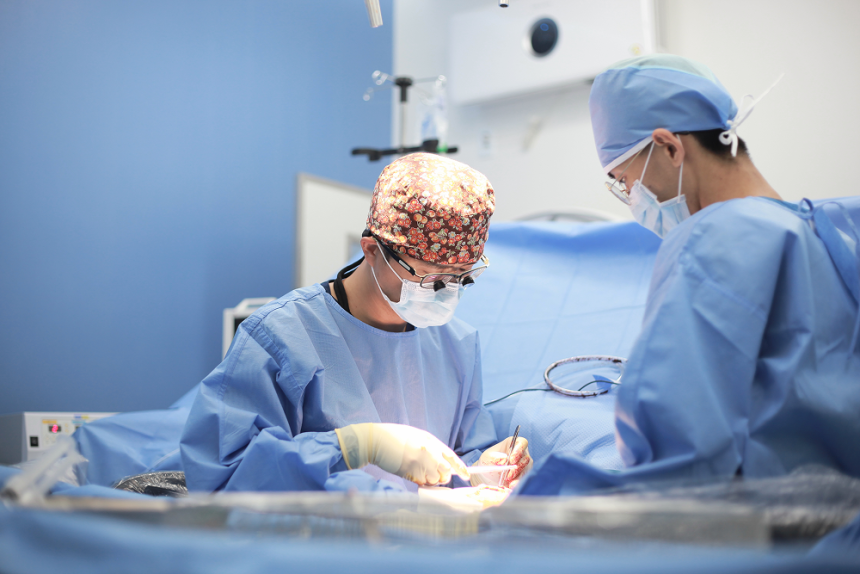
#Mint Hospital Chief Director Nam Woo-seok (Vascular Surgeon)
Dialysis blood vessels are constructed by connecting an artery and a vein to increase the volume of blood flowing into the vein and to make the blood vessels thicker and stronger.
Among these, an autologous arteriovenous fistula, which utilizes the patient's own blood vessels, is a representative hemodialysis access route that can be used for a long period if properly constructed and managed.
However, vascular conditions vary greatly from patient to patient.
The appropriate surgical method and difficulty may vary depending on age, the presence of diabetes or hypertension, past use of central venous catheters or surgical experience, the thickness and elasticity of the blood vessels, and the depth of the veins .
First Dialysis Vascular Surgery, What Is Important?
Dialysis vascularization is not completed merely by connecting an artery and a vein. It is important to create a blood vessel that can be used repeatedly in the actual hemodialysis setting.
To this end, a preoperative ultrasound examination must be performed to check the diameter and blood flow status of the arteries and veins, and to examine for stenosis or blood clots. Subsequently, the surgical site is determined by considering which artery and vein to connect and whether a sufficient space can be secured for future needle insertion.
Even during surgery, it is necessary to finely adjust the course and depth of the blood vessels. If the blood vessels are too deep, it is difficult to accurately insert the needle during each dialysis session, which can lead to repeated puncture failures. Conversely, if they are too shallow or the skin condition is not appropriate, there is a possibility of problems such as bleeding or skin damage.
In particular, patients with thick subcutaneous tissue or deep veins due to obesity, those with short usable blood vessel lengths, or those whose vascular structure has been altered by previous surgeries or procedures require a more precise approach. Depending on the situation, processes such as superficialization to move deep vessels closer to the skin or adjusting the vessel course to facilitate needle insertion may be performed in parallel.
Chief Director Nam Woo-seok stated, “What is important in dialysis vascular surgery is not the fact that an artery and a vein have been connected, but creating a blood vessel that can be stably and repeatedly used in actual dialysis,” adding, “Surgery must be performed by considering not only the thickness, depth, and direction of the blood vessel, but also the section where a needle can be inserted . ”
If the first surgery goes wrong, additional procedures may need to be repeated.
After creating a dialysis vessel, the vein undergoes a 'maturation' process in which it thickens and strengthens as it adapts to the large amount of blood flowing in from the artery.
However, if maturation failure occurs where blood vessels do not develop sufficiently, or if stenosis and blood clots develop prematurely, it may become difficult to use them for dialysis as scheduled. In this case, additional treatments such as vascular angioplasty (balloon dilation) to widen the vessels or thrombectomy to remove blood clots may be necessary. If the existing blood vessels become unusable, it may lead to a situation where a new dialysis vessel must be created in another area.
The problem is that there is no infinite number of sites where new dialysis blood vessels can be created. Since suitable vessels in the arm must be used sequentially, it is important to plan from the beginning to preserve available vessels and ensure long-term use.
Chief Director Nam Woo-seok explained, “When creating the first dialysis blood vessel, one must consider that it will be used repeatedly for a long time rather than focusing solely on allowing blood to flow immediately,” adding, “Patients with poor vascular conditions or complex structures require a process of thoroughly checking the vessels and adjusting their location and course, so surgery may take more time . ”
Confirmation after dialysis vascular surgery (construction)
Even if the dialysis vascular access is successfully completed, it cannot be used immediately. It must undergo a maturation process for a certain period during which the blood vessels thicken and blood flow increases before it can be used for actual dialysis.
During this period, it is important to check through ultrasound examinations and other methods whether the blood vessels are sufficiently developed and whether any early stenosis or blood clots obstructing blood flow have occurred. If a problem is detected, necessary additional treatment can be performed before using the blood vessels to maintain their function.
Continuous monitoring of the vascular condition is necessary even after starting dialysis.
Changes such as a weakening or change in the vibration of the blood vessel that is usually felt by touch, a drop in blood flow during dialysis or repeated pressure warnings from the machine, difficulty in inserting the needle compared to before, or a longer time for hemostasis after dialysis are signs that may indicate vascular stenosis.
If you experience swelling in your arms or hands, it is also necessary to check for any issues with blood flow. If abnormalities are detected early, there is a higher chance of restoring function through relatively simple methods compared to when blood vessels are completely blocked.
Chief Director Nam Woo-seok stated , “The first dialysis vascular access is a surgery that lays the foundation for future dialysis treatment,” adding, “If you are about to undergo the first access procedure, it is advisable to examine whether sufficient preoperative vascular ultrasound evaluation is performed, whether the access procedure is tailored to the patient’s vascular condition, and whether the process can be integrated from the postoperative maturation stage to opening procedures for stenosis and occlusion, as well as long-term follow-up care . ”
Reporter Jung Hee-won happy1@sportsworldi.com
https://n.news.naver.com/mnews/article/396/0000754175?sid=103