Mint Hospital Introduces 'SmartSpeed AI'... Enables 80% Clearer Resolution and Faster MRI Scans
Following its 'One-stop MRI Diagnostic System,' which provides university hospital-level precise diagnosis and rapid results simultaneously, Mint Hospital recently unveiled an 'Advanced AI Equipment Upgrade.'
When a serious disease such as cancer is suspected, what torments patients the most is not the disease itself, but the 'nerve-wracking time' of waiting for the results.
Patients must wait weeks to months to undergo an MRI (Magnetic Resonance Imaging) scan at a university hospital, and even if an external interpretation is requested, they must wait another long time to hear the attending physician's explanation. The cost also amounts to hundreds of thousands of won, placing a significant psychological and financial burden on patients.
Under these circumstances, Mint Hospital decided to introduce state-of-the-art equipment. The hospital's greatest strength is that radiologists personally interpret images and provide patients with detailed explanations in a one-stop service.

#Mint Hospital Introduces 'SmartSpeed AI', Enabling 80% Clearer Resolution and Faster MRI Scans
Generally, at university hospitals, the process involves a radiologist completing the interpretation report and the attending physician explaining it to the patient; however, at Mint Hospital, the radiologist meets directly with the patient on the day of the examination to provide a detailed explanation while viewing the monitor.
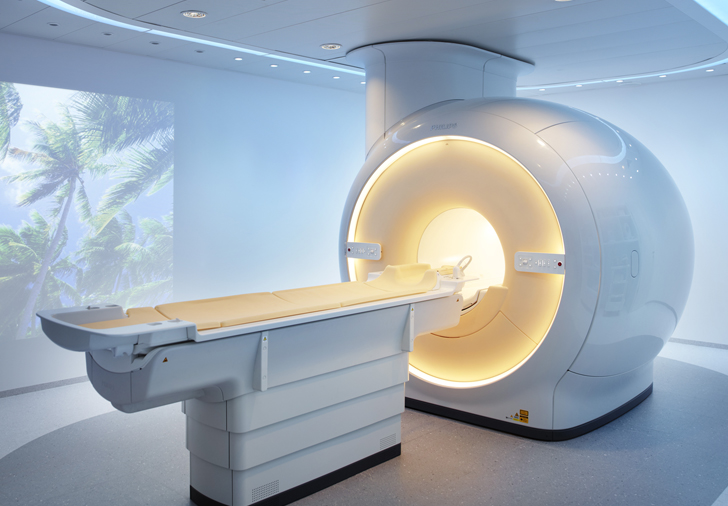
In addition, the hardware's completeness has been elevated to the highest level by recently equipping the top-of-the-line Philips MRI equipment with a major upgrade featuring 'SmartSpeed AI,' an AI-based image reconstruction technology.
The core of this equipment is its groundbreaking 'time reduction' and 'de-noising' technology. Through this technology, resolution is improved by more than 80% (up to 2 times) compared to existing methods, allowing for the clear capture of brain tissue, blood vessels, nerves, and even minute lesions in the early stages of disease.
Its power is particularly evident in upper abdominal imaging, such as imaging the liver or pancreas. AI corrects image distortions that are prone to occur due to breathing, such as patients holding their breath, and speeds up the examination by up to three times, significantly reducing claustrophobia and discomfort for patients who must lie inside the enclosed MRI machine. This has resulted in not only a reduction in waiting times but also an improvement in the quality of the examination.
Director Kim Young-sun of Mint Hospital (Radiology Specialist, Doctor of Medicine) stated, “Through this upgrade incorporating AI capabilities, we will enhance patient satisfaction with examinations by providing more accurate diagnoses in reduced time.”
Reporter Jung Hee-won happy1@segye.com